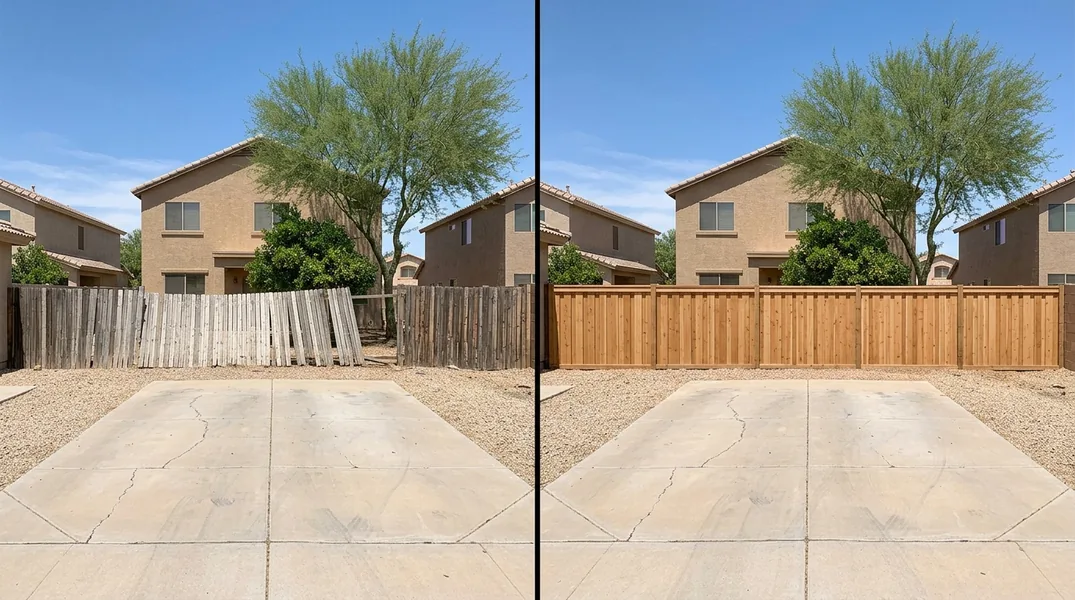
Understanding the Desert Challenge: Why Material Matters in Chandler
Living in Chandler means your fence faces one of the harshest climates in the country. Scorching summers with temperatures regularly exceeding 110 degrees Fahrenheit, intense UV radiation, minimal rainfall, and dramatic temperature swings between day and night all take a toll on outdoor structures. When you're investing in a new fence, choosing the right material isn't just about aesthetics or initial cost, it's about selecting something that will stand up to years of Arizona's relentless desert conditions.
The two most popular choices for homeowners in Chandler are wood and vinyl. Both have legitimate advantages and real drawbacks when exposed to desert heat. Understanding how each material performs under these specific conditions will help you make an informed decision that aligns with your budget, lifestyle, and long-term maintenance expectations. Let's break down what you need to know.
Wood Fencing: Traditional Appeal Meets Desert Reality
Wood & Privacy Fence Installation remains the classic choice for homeowners who value natural beauty and the timeless character that only real wood can provide. A well-maintained wood fence adds warmth to your property, complements virtually any architectural style, and offers complete privacy when installed as a solid panel fence. Many Chandler homeowners are drawn to wood because it feels authentic and can be stained or painted in virtually any color to match their home's exterior.
However, Chandler's desert heat presents significant challenges for wood. The intense UV radiation causes wood to fade, crack, and warp over time. Arizona's low humidity means wood dries out rapidly, which can lead to splitting and checking (small cracks across the grain). The temperature swings between 115-degree days and cool nights create expansion and contraction cycles that stress the wood fibers. Additionally, while Chandler isn't known for heavy moisture, monsoon season and occasional heavy rains can expose wood to water damage if the fence isn't properly sealed and maintained. Wood fences typically require staining or sealing every two to three years to maintain their appearance and protect against the elements.
The reality is that a wood fence in the Arizona desert demands commitment. You'll need to inspect it regularly, re-stain or re-seal it frequently, replace damaged boards as they deteriorate, and potentially deal with repairs from wind damage or warping. For homeowners willing to invest time and money into maintenance, wood can last 15 to 20 years. For those seeking a set-it-and-forget-it solution, wood may create frustration and unexpected expenses.
Vinyl Fencing: Low Maintenance in the Desert Sun
Vinyl & PVC Fence Installation has emerged as the preferred choice for many desert homeowners, and for good reason. Vinyl is engineered to resist UV damage, won't rot or splinter, and requires virtually no painting or staining. A simple annual rinse with a garden hose is typically all the maintenance a vinyl fence needs. It won't warp, crack, or split from Chandler's extreme temperature fluctuations, and it's completely unaffected by Arizona's dry climate.
The material science behind vinyl makes it particularly well-suited for desert conditions. Modern vinyl formulations include UV stabilizers and colorants that are mixed throughout the material, not just applied to the surface like paint or stain. This means even if the surface gets scuffed or worn, the color remains consistent throughout. Vinyl doesn't absorb moisture, so it's immune to the water damage that can affect wood. It also won't attract termites or other wood-boring insects, a consideration for any wooden structure in Arizona.
From an aesthetic standpoint, vinyl has come a long way. While early vinyl fences looked plastic and artificial, today's vinyl products convincingly mimic the appearance of wood grain and can be manufactured in multiple colors and styles. You can achieve the privacy and security of a solid panel fence, the classic look of a picket fence, or semi-private designs, all without the maintenance burden. Most vinyl fences are designed to last 25 to 30 years or longer, and many manufacturers offer warranties of 20 years or more.
Vinyl vs Wood Fence Cost: What You'll Actually Spend in Chandler
When comparing vinyl vs wood fence cost, the initial investment typically favors wood. A quality wood fence usually costs less per linear foot to install than vinyl. Depending on the style, height, and materials chosen, wood fencing might run $15 to $25 per linear foot installed, while vinyl generally ranges from $25 to $40 per linear foot. For a 150-foot perimeter, this could mean a difference of $1,500 to $2,250 in upfront costs.
However, looking only at installation pricing tells an incomplete story. Wood's true cost emerges over the life of the fence. Factor in professional staining or sealing every two to three years at $500 to $1,500 per application, board replacements, repairs from weather damage, and the labor required for ongoing maintenance. Over a 20-year period, a wood fence might cost an additional $3,000 to $5,000 or more in maintenance and repairs. A vinyl fence, by contrast, has minimal maintenance costs beyond occasional cleaning.
When you calculate the total cost of ownership over 20 to 25 years, vinyl often becomes the more economical choice despite its higher initial installation cost. You're essentially paying more upfront to avoid years of maintenance expenses and hassle. For budget-conscious homeowners planning to stay in their Chandler home long-term, vinyl typically delivers better value. That said, if you plan to sell within five to ten years and want the lowest possible upfront investment, wood might make sense if you're willing to accept that future maintenance will be the next owner's responsibility.
Best Low Maintenance Fence Material: The Vinyl Advantage
When homeowners ask about the best low maintenance fence option for Arizona's climate, vinyl consistently wins. The appeal is straightforward: install it and maintain it minimally for decades. There's no staining, no sealing, no repainting, and no seasonal inspections required. You won't spend weekends power washing, scraping paint, or replacing damaged boards. For busy professionals, retirees, or anyone who simply doesn't want to spend their free time on fence maintenance, this is invaluable.
The low-maintenance nature of vinyl also means fewer surprises and unexpected repair bills. You can budget for your fence cost at installation and move on. There are no hidden expenses lurking five or ten years down the road. This predictability appeals to homeowners who prefer to know exactly what they're investing in a home improvement project. Additionally, because vinyl doesn't deteriorate like wood, your fence will look essentially the same in ten years as it did on day one, maintaining your home's curb appeal without any effort on your part.
If you're comparing vinyl to other options like Chain Link Fence Installation or Aluminum & Ornamental Iron Fencing, vinyl remains the lowest maintenance choice while offering superior privacy and aesthetic appeal. Chain link requires occasional rust treatment and cleaning, while ornamental iron needs periodic paint touch-ups to prevent rust. Vinyl requires neither.
Making Your Decision: Which Fence Material Is Right for You
Choosing between wood and vinyl ultimately depends on your priorities, budget, and lifestyle. If you love the natural appearance of wood, enjoy hands-on home maintenance, and plan to stay in your home for a relatively short time, a quality wood fence could be the right choice. The upfront savings and authentic aesthetic appeal might outweigh the maintenance burden for you. However, be realistic about the commitment involved in Chandler's desert climate.
If you prioritize convenience, long-term value, and consistent appearance over many years, vinyl is the superior choice. It's particularly ideal if you're building a home in Chandler that you plan to enjoy for decades, or if you simply don't want to dedicate time and money to fence maintenance. The peace of mind that comes with knowing your fence will look great with minimal effort is worth something.
The best way to move forward is to discuss your specific situation with experienced professionals who understand Chandler's unique climate challenges. Chandler Fence Company has installed both wood and vinyl fences throughout the area and can provide honest guidance based on real-world performance in our desert environment. We can walk you through the pros and cons specific to your property, show you examples of both materials in local homes, and help you understand the true cost of ownership for each option. Contact us at (623) 600-7122 or request a free estimate to discuss which material will best serve your home and lifestyle.
Looking for a professional fence contractor in Chandler? Chandler Fence Company responds fast for all your fence needs.
Get a Free Quote