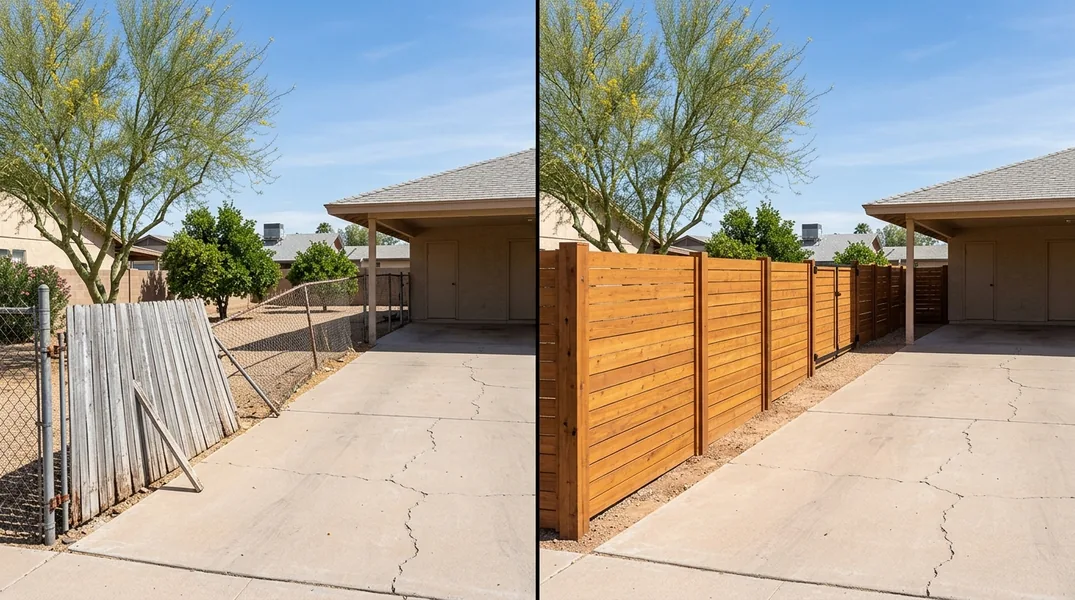
How Long Does a Wood Fence Actually Last in Arizona?
If you're a homeowner in Chandler considering Wood & Privacy Fence Installation, one of your first questions is likely: how long will my fence last? The answer depends on several factors, but in Arizona's harsh desert climate, you can generally expect a wood fence to last between 15 and 20 years with proper care. Some fences may push toward 25 years if they receive exceptional maintenance, while others might show significant wear after just 12 years if neglected.
The Arizona sun is relentless. Unlike homeowners in milder climates where wood fences can last 25 to 30 years or more, property owners here face intense UV radiation, extreme temperature swings, and low humidity that all accelerate wood degradation. The sun's rays break down the wood fibers themselves, while the dry heat causes wood to shrink and crack. Winter nights can drop dramatically, causing expansion and contraction cycles that stress the wood structure. These environmental pressures are the primary reason why fence lifespan in Chandler tends to be shorter than the national average.
The Role of Wood Type and Quality in Fence Longevity
Not all wood fences are created equal, and the type of wood you choose has a dramatic impact on how long your fence will last. Pressure-treated pine and fir are the most common and affordable options for residential fencing, and they typically last 15 to 20 years in Arizona conditions. Cedar and redwood are naturally more resistant to rot and insects, which can extend their lifespan to 20 to 25 years, but they come at a higher upfront cost. If you want maximum durability, tropical hardwoods like ipe or cumaru can last 25 to 30 years or longer, though these are rarely used for residential fencing due to expense and installation complexity.
The quality of the wood itself also matters tremendously. Higher-grade lumber with tighter grain patterns and fewer knots will resist weathering better than lower grades. When you work with a reputable fence company like Chandler Fence Company, they understand which wood species and grades perform best under Arizona's specific climate conditions. Pressure-treated wood has been chemically treated to resist rot and insects, which is why it's such a popular choice for homeowners balancing cost and durability. However, even pressure-treated wood needs additional protection from the sun's UV rays to reach its full potential lifespan.
Does Staining Really Help? The Truth About Fence Maintenance
Here's the straightforward answer: yes, staining absolutely helps extend your wood fence's lifespan, and it's one of the most important investments you can make after installation. A quality stain acts as a protective barrier against UV radiation, moisture, and the elements. In Arizona's intense sun, an unstained wood fence will begin showing visible signs of damage, graying, and weathering within just 1 to 2 years. A properly stained fence can maintain its appearance and structural integrity significantly longer. Think of staining as sunscreen for your fence, protecting the wood from the very forces that cause premature aging.
The key word here is regular staining. A single stain application at the time of installation is not enough. Most wood fence experts recommend restaining every 2 to 3 years in Arizona's climate, though some high-quality stains may last up to 4 years before needing reapplication. The stain gradually wears away due to UV exposure, rain, and foot traffic, so periodic maintenance is essential. If you skip staining or delay it too long, the wood becomes vulnerable to moisture penetration, which leads to rot, splitting, and structural weakness. By the time you notice serious damage, it may be too late to simply restain and may require board replacement or a full fence replacement.
Beyond staining, other maintenance tasks keep your fence healthy. Regular cleaning to remove dirt, mildew, and debris prevents moisture from being trapped against the wood. Trimming vegetation that grows against the fence improves air circulation and reduces rot risk. Inspecting for signs of damage and addressing them promptly prevents small problems from becoming expensive repairs. If you're not comfortable maintaining your fence yourself, many homeowners find it worthwhile to schedule professional maintenance appointments.
When to Replace a Fence: Signs Your Wood Fence Has Reached the End
Even with excellent care, every wood fence eventually reaches the end of its serviceable life. Knowing the warning signs helps you plan for replacement before your fence becomes a safety hazard or eyesore. The most obvious sign is visible rot, which appears as soft, spongy wood that may be discolored or have a crumbly texture. If you can easily push a screwdriver or awl into the wood, that's a strong indicator of rot damage. Widespread cracking, splitting, and warping are also red flags, especially when they affect multiple boards or posts. Leaning sections or posts that no longer stand straight suggest structural compromise, often due to rotted footings or weakened posts.
Pest damage from termites or carpenter ants is another reason to consider replacement. If you notice small holes, sawdust-like frass, or actual insects in or around your fence, professional pest inspection is warranted. Severe paint peeling or stain failure across large sections means the wood is now exposed and vulnerable. If your fence has reached 20 years of age in Arizona's climate and shows multiple signs of wear, replacement is likely more cost-effective than continued repair attempts. When you're ready to move forward, contacting Chandler Fence Company for a free estimate on Wood & Privacy Fence Installation can help you understand your options and budget for a new fence.
Wood & Privacy Fence Installation Near Me: Choosing the Right Contractor
If your current fence is nearing the end of its life or you're planning a new installation, selecting the right contractor makes a huge difference in how long your new fence will last. A professional fence installer understands Arizona's specific climate challenges and can recommend wood types, stain products, and construction techniques that maximize longevity. They'll ensure proper post installation with adequate depth and concrete footings, which prevents premature failure from frost heave or ground settling. They'll also use quality hardware and fasteners designed to resist rust and corrosion in Arizona's dry climate.
When evaluating contractors, ask about their experience with wood fences in Arizona specifically. Request references from customers whose fences have been installed for at least 5 years so you can see how well they've held up. Discuss staining recommendations and whether the contractor offers maintenance services. A reputable company will provide clear information about expected lifespan, maintenance requirements, and pricing for your specific project. Chandler Fence Company has served the local community with professional fence installation and can guide you through every step of the process. Call (623) 600-7122 or visit the website to discuss your project and get started on a fence built to last.
Extending Your Fence's Life: Maintenance Tips for Arizona Homeowners
Beyond staining, several practical maintenance habits can significantly extend your wood fence's lifespan. Inspect your fence at least twice a year, ideally in spring and fall, looking for early signs of damage, rot, or pest activity. Clean your fence annually with a gentle pressure washer or soft brush and mild soap to remove dirt, algae, and mildew that trap moisture. Keep gutters and downspouts directed away from fence lines so that concentrated water runoff doesn't saturate the wood. Trim tree branches and vegetation that overhang or press against your fence to improve air circulation and reduce moisture retention.
Consider the drainage situation around your fence posts. If water pools or collects near the base of posts, it accelerates rot at the most vulnerable point. Ensure the ground slopes slightly away from the fence line, or add gravel to promote drainage. If you notice a single rotted board, replacing just that board is far more affordable than waiting until the entire fence fails. Many homeowners find that investing in professional staining and maintenance services every few years is worthwhile insurance against premature failure. In Arizona's unforgiving climate, proactive care truly pays dividends in extended fence life and maintained property value.
Looking for a professional fence contractor in Chandler? Chandler Fence Company responds fast for all your fence needs.
Get a Free Quote