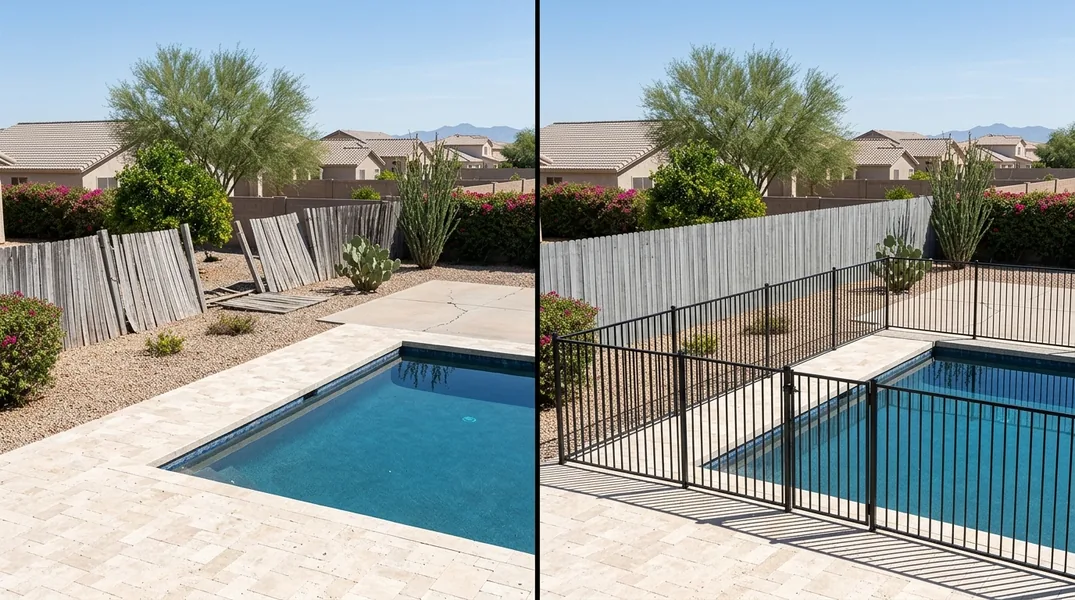
Understanding Arizona Pool Fence Code Requirements
If you own a swimming pool in Chandler, Arizona, you are legally required to install a barrier fence that meets strict state and local code requirements. These regulations exist to prevent accidental drowning, especially among young children, and are enforced by the Arizona Department of Health Services. Failure to comply with pool fence code requirements can result in significant fines, liability issues, and even criminal charges in cases where a drowning occurs.
Arizona's pool fence regulations are comprehensive and detailed. The state requires that any residential pool must be completely enclosed by a barrier that prevents unauthorized access. This barrier can be a fence, wall, or combination of structures, but it must meet specific dimensions and construction standards. Understanding these requirements before you install or upgrade your pool barrier is essential for protecting your family and staying compliant with local Chandler ordinances.
Pool Fence Height Requirements in Arizona
One of the most critical aspects of Arizona pool fence code is the height requirement. Arizona law mandates that residential pool fences must be at least 4 feet tall, measured from the ground level to the top of the fence. This height is designed to create a sufficient barrier that makes it difficult for small children to climb over or access the pool area without adult supervision. The measurement must be taken on the side of the fence that faces away from the pool, and the fence must maintain this height consistently around the entire perimeter of the pool.
In addition to the minimum 4-foot height, the fence must also meet spacing requirements. Horizontal and vertical openings in the fence cannot exceed 4 inches in any dimension. This prevents children from squeezing through gaps or getting their heads stuck in the fence. Gates within the fence must also be included in these measurements. If you are considering Wood & Privacy Fence Installation around your pool area, it is important to work with an experienced contractor who understands these precise height and spacing regulations to ensure your installation meets all Arizona requirements.
Self Closing Pool Gate Requirements and Installation
A self closing pool gate is one of the most important safety features required by Arizona law. Every gate that provides access to the pool area must be equipped with a self-closing mechanism that automatically closes the gate after someone passes through it. Additionally, the gate must have a self-latching device that secures the gate in the closed position without requiring manual effort to latch. These mechanisms work together to ensure that the pool remains enclosed and protected at all times, even if someone forgets to close or latch the gate behind them.
The self-latching mechanism must be positioned at least 54 inches above the ground level, measured from the bottom of the gate. This height ensures that small children cannot easily reach and operate the latch. The gate itself must also open away from the pool, meaning it should open outward into the yard rather than inward toward the pool. When you install a self closing pool gate as part of your pool barrier, the gate should be constructed from the same materials as your fence for consistency and durability. Chandler homeowners often choose Wood & Privacy Fence Installation for their pool barriers because wood provides an attractive aesthetic while offering the strength needed to support properly functioning gates.
Pool Fence Material Options and Compliance
When selecting materials for your pool fence, you have several options that all can meet Arizona code requirements. Wood is a popular choice for residential pools because it offers privacy, aesthetic appeal, and durability when properly maintained. Vinyl & PVC Fence Installation is another excellent option that requires minimal maintenance and resists weathering in Arizona's hot, dry climate. Chain Link Fence Installation is a budget-friendly alternative that provides clear visibility into the pool area, which some homeowners prefer for safety reasons. Aluminum & Ornamental Iron Fencing combines durability with an elegant appearance suitable for upscale residential properties.
Regardless of which material you choose, the fence must be constructed so that it does not have any gaps or openings larger than 4 inches. The fence must also be sturdy enough to withstand the Arizona climate and remain structurally sound for years. Wood fences require regular staining or sealing to prevent rot and weathering, while vinyl and aluminum options are more low-maintenance. When evaluating pricing for pool fence installation, factor in both the initial installation cost and the long-term maintenance requirements of your chosen material. Chandler Fence Company can help you select the right material and design for your pool barrier that meets all code requirements while fitting your budget and aesthetic preferences.
Additional Safety Features and Local Inspection Requirements
Beyond the basic fence height and gate requirements, Arizona pool safety regulations include several additional features that may be required depending on your specific pool configuration. If your pool is adjacent to a house, wall, or other structure, that structure can serve as part of the barrier as long as it meets the height and opening requirements. However, doors and windows leading from the house to the pool must also have self-closing and self-latching mechanisms. Some pools may also require additional safety measures such as pool alarms, rescue equipment, or drain covers depending on the pool's design and construction.
Before you install or modify your pool fence, it is highly recommended to contact the City of Chandler's Building and Safety Department to understand any local variations or additional requirements that may apply to your property. Arizona state law sets the minimum standards, but local jurisdictions can impose stricter requirements. Once your pool fence is installed, you may need to schedule an inspection to verify compliance. Working with an experienced local contractor like Chandler Fence Company ensures that your installation meets all state and local requirements from the start, avoiding costly corrections later. Contact Chandler Fence Company at (623) 600-7122 or request a free estimate to discuss your pool fence project with a compliance-focused professional.
Maintaining Your Pool Fence for Ongoing Compliance
Installing a pool fence that meets code requirements is just the first step. You must also maintain your fence in good condition to ensure it continues to provide the required level of protection and safety. Regular inspections of your fence will help you identify any damage, rot, rust, or deterioration that could compromise the barrier's integrity. Check that all gates operate smoothly, close completely, and latch securely. Ensure that no gaps have developed in the fence that exceed the 4-inch opening limit. If you notice any damage or wear, repair or replace the affected sections promptly.
Arizona's intense sun and heat can take a toll on fence materials over time. Wood fences may develop cracks or splinters that create gaps or weak points. Vinyl fences can become brittle, and metal fences may rust if not properly sealed. By scheduling regular maintenance and addressing problems quickly, you can keep your pool fence compliant and safe for years to come. If you are unsure about the condition of your existing pool fence or need to upgrade it to meet current code requirements, Chandler Fence Company offers professional assessment and repair services. Call (623) 600-7122 today to have your pool barrier evaluated by an expert who understands Arizona's safety regulations inside and out.
Looking for a professional fence contractor in Chandler? Chandler Fence Company responds fast for all your fence needs.
Get a Free Quote